


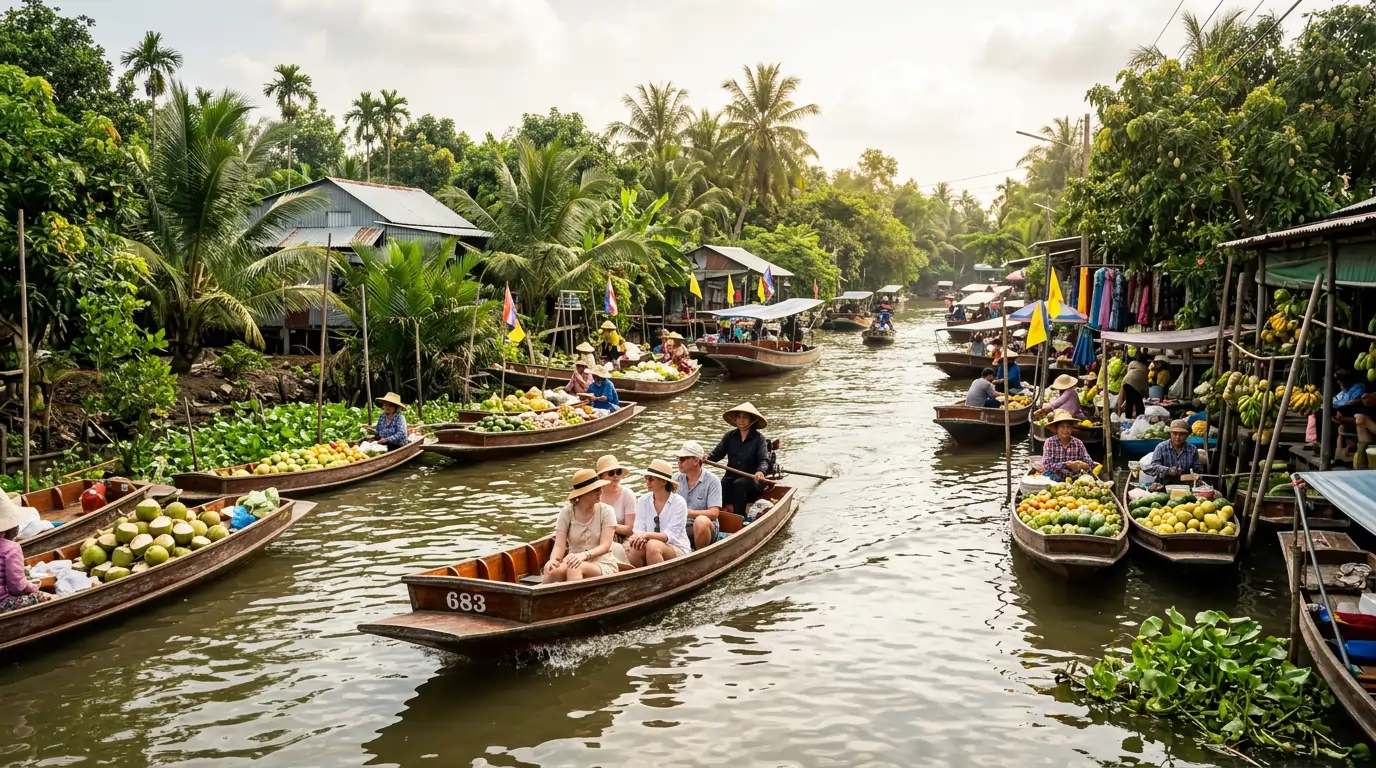
Vietnam has three climates running at the same time, so “the best time to visit” depends entirely on where you’re going.
TL;DR / Key Takeaways
- Overall sweet spot: February to April — dry in the south, warming up north, fewer crowds than December.
- Avoid: September–early November in Central Vietnam (typhoon season) and July–August in Hanoi/Halong (hot + humid + peak domestic travel).
- Cheapest from India: May–June and mid-September, if you’re okay with rain trade-offs.
Vietnam is long. Really long — about 1,650 km from Hanoi to Ho Chi Minh City. That means while the north is shivering in January fog, the south is sunbathing at 32°C. So before you book flights, the real question isn’t when to visit Vietnam — it’s which Vietnam you want to see.
This guide breaks it down by region, by month, and by trip type (beach, cruise, culture, honeymoon). Written for Indian travellers planning 2026 — with realistic notes on weather, crowds, costs, and the mistakes we see clients make every season.
The short answer: when is the best time to visit Vietnam?
February to April is the best overall time to visit Vietnam. You get dry weather across most of the country, comfortable temperatures (22–30°C), and the post-Tet lull means fewer domestic crowds. If you can only travel once, aim for March.
That said, Vietnam has three weather zones working on different schedules — so the “best month” shifts depending on your route.
Vietnam’s three climate zones (the part most blogs skip)
- North (Hanoi, Halong Bay, Sapa, Ninh Binh): Four seasons. Cold winters (Dec–Feb), hot humid summers (Jun–Aug), pleasant spring and autumn.
- Central (Hue, Hoi An, Da Nang, Ba Na Hills): Dry Feb–Aug. Heavy rain and typhoon risk Sep–Nov. This is the part people get wrong.
- South (Ho Chi Minh City, Mekong Delta, Phu Quoc): Two seasons only — dry (Dec–Apr) and wet (May–Nov). Wet season = short afternoon downpours, not all-day rain.
Best time to visit Vietnam — region by region
Northern Vietnam (Hanoi, Halong Bay, Sapa)
- Best: October–November and March–April
- Skip: July–August (humid, frequent storms can cancel Halong cruises)
- Sapa bonus: September for rice terrace harvest gold; January for occasional snow
Central Vietnam (Hoi An, Da Nang, Hue)
- Best: February–May
- Skip: September–November (typhoons; Hoi An regularly floods in October)
- Beach window for Da Nang/An Bang: April–August
Southern Vietnam (HCMC, Mekong, Phu Quoc)
- Best: December–March
- Phu Quoc honeymoon window: November–March
- Wet season is liveable — pack a poncho, plan mornings outdoors
Month-by-month breakdown
| Month | North | Central | South | Verdict for Indians |
|---|---|---|---|---|
| Jan | Cold, misty | Cool, dry | Perfect | Great for South + Phu Quoc |
| Feb | Cool, dry | Dry, warm | Perfect | Excellent all-round |
| Mar | Mild, dry | Warm, dry | Hot, dry | Best overall month |
| Apr | Warm | Hot | Very hot | Good before Indian summer kicks in |
| May | Hot, humid | Hot | Wet starts | Cheaper; expect rain |
| Jun–Aug | Hot, stormy | Hot, dry beaches | Wet | Avoid unless beach-only |
| Sep | Mild | Typhoon risk | Wet | Skip Central |
| Oct | Crisp, lovely | Floods possible | Wet easing | North only |
| Nov | Cool, dry | Improving | Drying up | Good for North + South combo |
| Dec | Cold | Cool | Perfect | Peak season, premium prices |
Best time by trip type
- Halong Bay cruise: October–April (avoid July–August storms)
- Honeymoon (Phu Quoc / Da Nang): January–March
- Photography (Sapa terraces): Mid-September
- Budget trip: Mid-May to early June
- Family with kids: February–March (mild everywhere, less rain)
Costs from India in 2026 (realistic ballpark)
- Flights Kochi/Delhi/Mumbai → Hanoi or HCMC: ₹22,000–₹45,000 return depending on month. Cheapest in May–June, peak in December.
- 5N/6D package (mid-range, like our Hanoi–Halong–Da Nang itinerary): From ~₹45,000 per person.
- E-visa: USD 25 (single entry). Apply via the official Vietnam Immigration portal — allow 3–5 working days.
Pro tips (from actual client trips)
- Don’t trust one weather app for “Vietnam.” Check Hanoi, Da Nang, and HCMC separately. Most disappointments come from assuming one forecast covers the country.
- Book Halong cruises with a buffer day. If a storm cancels your sailing, you want a spare night in Hanoi — not a missed flight home.
- Tet (Lunar New Year) is a trap. In 2026, Tet falls around February 17. Beautiful culturally, but many shops, local restaurants, and domestic flights are disrupted for 5–7 days. Either go before (early Feb) or after (early March).
- Central Vietnam in October sounds romantic — until Hoi An floods. We’ve had to reroute clients twice in five years. Worth checking Vietnam Meteorological Administration advisories before locking dates.
Common mistakes Indian travellers make
- Booking Hoi An in October because Instagram looked dreamy
- Doing Sapa in July (rice is green and pretty, but trails turn into mud)
- Cramming North + Central + South into 5 nights — it’s a 3-flight country, not a 3-city one
- Ignoring visa processing time and applying 4 days before the flight
- Assuming Phu Quoc = Bali. It’s quieter, smaller, more resort-driven. Lovely, but set expectations.
Quick pre-booking checklist
- Decided which region(s) — not just “Vietnam”
- Cross-checked Tet 2026 dates against your travel window
- Booked Halong cruise with one buffer night in Hanoi
- E-visa applied at least 7 days before flight
- Travel insurance covering typhoon-related cancellations (Sep–Nov)
What to do next
If you’ve narrowed down your window but still aren’t sure which itinerary fits — North-only, the classic three-city loop, or a Phu Quoc beach add-on — that’s the part we help with. Our team has been routing Indian travellers through Vietnam for years and can flag the small things (transfer timings, internal flight gaps, weather buffer days) that quietly ruin trips.

Still juggling dates, regions, and weather windows?
That's the part we genuinely enjoy. Cosima Holidays has spent 27 years building travel itineraries for Indian families, couples, and groups — and Vietnam is one of our most-booked 2026 destinations.
-
Customised routing across North, Central & South Vietnam
-
E-visa + flight + hotel handled end-to-end
-
Honest advice on what's worth skipping (we'll tell you)
Frequently Asked Questions
March is the best single month — dry across all three regions, mild temperatures, and post-Tet crowds have eased.
Yes, the south and north remain visitable May–August. Avoid Central Vietnam from September to November due to typhoon and flooding risk.
Tet falls around 17 February 2026. Avoid travelling during the 5 days around it — shops close, domestic flights are packed, and prices spike.
May to early June, and mid-September. Flights from India can drop to ₹22,000–₹28,000 return, and hotels offer 20–30% discounts.
Enough for one region — either North (Hanoi + Halong + Ninh Binh) or Central (Da Nang + Hoi An + Ba Na Hills). Not enough for a full north-to-south loop.
Yes. Indian passport holders need an e-visa (USD 25, single entry, valid 90 days). Apply via the official Vietnam Immigration portal at least 7 days before travel.
October to April. Skies are clearer, seas calmer, and cruise cancellations are rare. Avoid July–August storms.
Different vibe. Phu Quoc is quieter, more resort-led, and cheaper for Indian honeymooners — best November to March.
No. Southern Vietnam's wet season usually means short, heavy afternoon showers — mornings stay clear and most sightseeing is doable.
Reasonably. Major cities have Indian restaurants, and Buddhist-influenced chay (vegetarian) menus are common. Carry snacks for Halong cruises and Sapa treks.

