


This is the month-by-month data reference for Kerala’s weather: temperature range, rainfall and crowd level for all twelve months, in one table. If you already know roughly when you want to travel and just need the numbers, start with the table below. If you are still deciding whether to come in monsoon or winter, our best time to visit Kerala guide walks through that decision by traveller type.
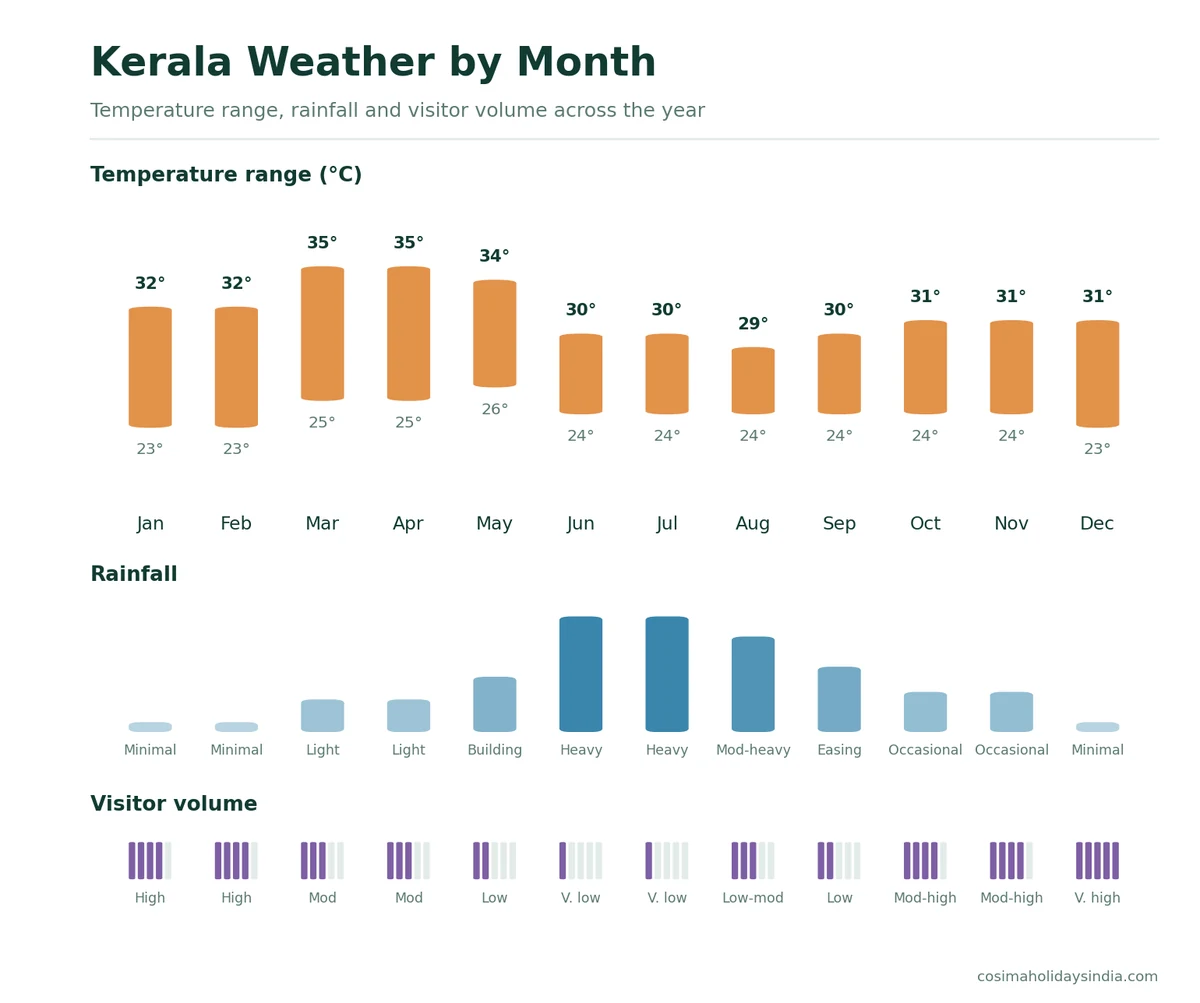
Kerala Weather Month by Month at a Glance
| Month | Temperature | Rainfall | Crowd level | Best for |
|---|---|---|---|---|
| January | 23–32°C | Minimal | High | Beaches, backwaters, wildlife |
| February | 23–32°C | Minimal | High | Munnar trekking, Varkala cliffs |
| March | 25–35°C | Occasional pre-monsoon showers | Moderate | Hill stations, Wayanad, Thekkady |
| April | 25–35°C | Occasional pre-monsoon showers | Moderate | Vishu festival, budget travel |
| May | 26–34°C | Increasing showers | Low | Ayurveda, off-season rates |
| June | 24–30°C | Heavy and consistent | Very low | Ayurveda, monsoon photography |
| July | 24–30°C | Heavy and consistent | Very low | Waterfalls, wellness retreats |
| August | 24–29°C | Moderate to heavy | Low to moderate | Onam, cultural immersion |
| September | 24–30°C | Decreasing | Low | Nature photography, budget travel |
| October | 24–31°C | Occasional showers | Moderate to high | All-round touring |
| November | 24–31°C | Occasional showers | Moderate to high | Backwater cruises, beaches, trekking |
| December | 23–31°C | Minimal | Very high | Christmas in Fort Kochi, family trips |
Kerala’s weather is not just about sun or rain. It shapes the festivals you will witness, the backwater experiences you can book, and even the seafood on your plate. The month sections below explain what each set of numbers actually means on the ground.
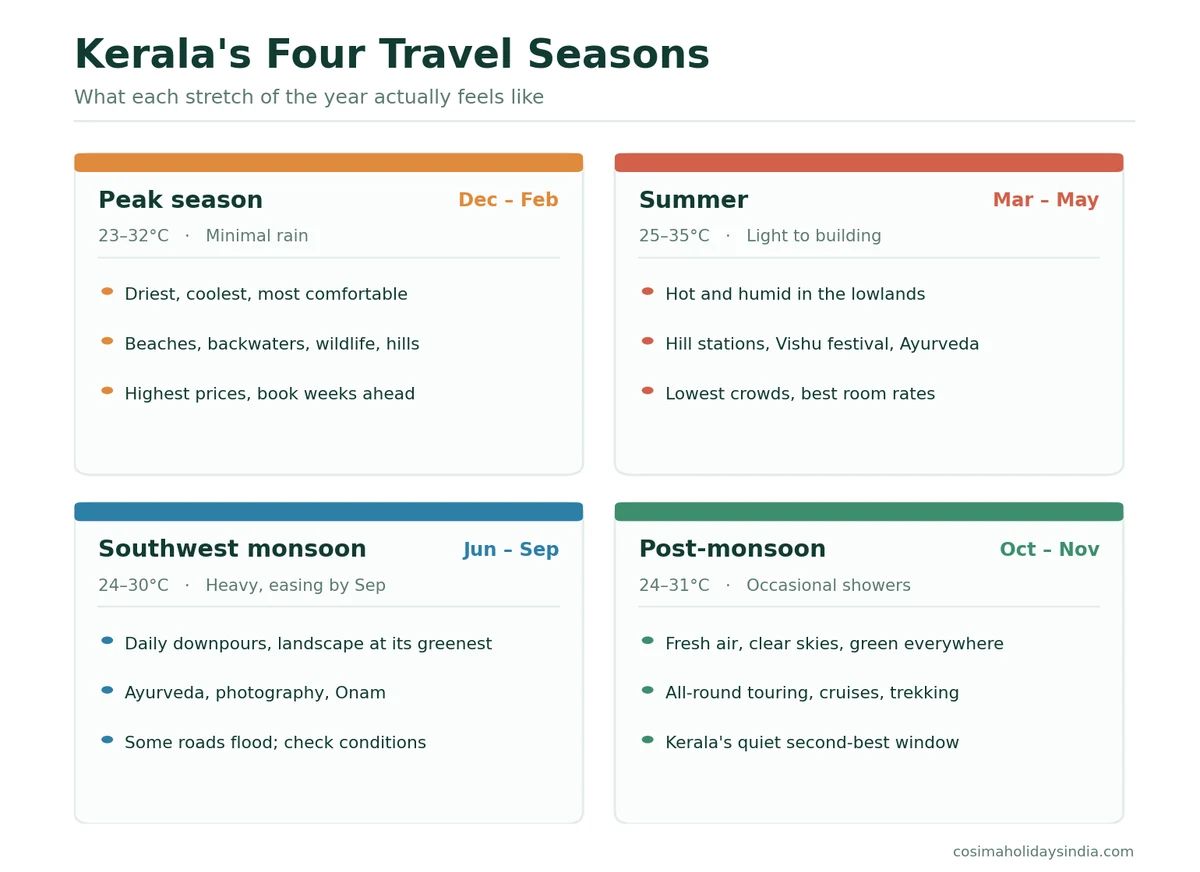
January–February: Peak Season Perfection
Temperature: 23°C–32°C
Rainfall: Minimal
Crowd Level: High
January kicks off Kerala’s golden window. Cool mornings, warm afternoons, and zero humidity make this the most comfortable time to explore. You’ll find beaches buzzing with activity and houseboats fully booked weeks in advance.
February continues the pleasant streak. The weather stays dry and breezy—perfect for trekking in Munnar or lounging on Varkala’s cliffs. However, expect premium prices and crowded attractions since tourists flock here during these months.
Book early if you want a houseboat
Alappuzha and Kumarakom houseboats sell out furthest ahead in these two months. If a backwater night is the centrepiece of your trip, lock it in before you book flights — see our Kerala houseboat packages and prices.
Best for: Beach holidays, backwater cruises, wildlife safaris, hill station visits
March–April: Summer Heat Builds Up
Temperature: 25°C–35°C
Rainfall: Occasional pre-monsoon showers
Crowd Level: Moderate
March starts warm but manageable. Coastal areas feel the heat more than hill stations like Wayanad or Thekkady. You’ll still enjoy outdoor activities, though midday sun can be intense.
April turns up the temperature dial. Humidity creeps in, making afternoons sticky and uncomfortable in lowland areas. Yet this period offers something special—Vishu, Kerala’s New Year festival, falls in mid-April. You’ll witness traditional rituals and feast on elaborate sadya meals.
Head uphill to dodge the heat
Hill stations remain pleasant escapes during these months, and prices drop compared to winter. A Munnar or Wayanad-weighted itinerary works far better than a coastal one in April — our Kerala tour packages can be built around the hills for exactly this reason.
Best for: Hill station retreats, cultural festivals, budget travel
May: Pre-Monsoon Transition
Temperature: 26°C–34°C
Rainfall: Increasing showers
Crowd Level: Low
May sits in an awkward spot. Heat peaks while sporadic thunderstorms begin. The air feels heavy, and most travelers avoid this month.
But there’s a silver lining. Tourist spots empty out, hotels slash rates, and you’ll experience Kerala without the crowds. Early morning or late evening explorations work best when temperatures cool down.
Ayurvedic treatments gain popularity during this time. Traditional wisdom suggests monsoon onset is ideal for rejuvenation therapies, so wellness resorts start filling up.
Best for: Ayurveda treatments, off-season bargains, quiet getaways
June–July: Southwest Monsoon Arrives
Temperature: 24°C–30°C
Rainfall: Heavy and consistent
Crowd Level: Very low
June marks the monsoon’s dramatic entrance. Rain transforms Kerala into a lush green wonderland. Rivers swell, waterfalls roar, and the entire landscape comes alive.
July continues the wet spell. Expect daily downpours, sometimes lasting hours. Roads can flood, and outdoor activities get limited. Yet monsoon has its own magic—the smell of wet earth, mist-covered hills, and nature at its most vibrant.
Why some travellers choose monsoon on purpose
This season attracts a specific type of traveler: those seeking tranquility and natural beauty over beach parties. Ayurvedic centers thrive since the humid air helps herbal treatments penetrate deeper. Rates are at their lowest, and you will have the backwaters largely to yourself.
Best for: Ayurveda packages, monsoon tourism, photography, indoor cultural experiences
August: Monsoon Continues with Festivals
Temperature: 24°C–29°C
Rainfall: Moderate to heavy
Crowd Level: Low to moderate
August keeps the rain coming, though intensity decreases slightly. The state celebrates Onam, its biggest festival, usually falling in late August or early September.
Onam brings Kerala to life despite the weather. You’ll see elaborate flower carpets (pookalam), snake boat races, and traditional dance performances. Hotels and homestays offer special Onam sadya—a multi-course vegetarian feast served on banana leaves.
Travel during Onam requires advance booking. Locals return home for celebrations, filling up accommodations and transport.
Best for: Cultural immersion, Onam festivities, authentic local experiences
September: Monsoon Winds Down
Temperature: 24°C–30°C
Rainfall: Decreasing
Crowd Level: Low
September bridges monsoon and pleasant weather. Showers become less frequent, though occasional heavy rain still occurs. The landscape remains brilliantly green from months of rainfall.
This transitional month offers advantages. Fewer tourists mean better prices and peaceful attractions. Nature looks its freshest, and waterfalls flow at full force.
However, some areas might still face waterlogging. Check weather forecasts and road conditions before planning treks or remote village visits.
Best for: Nature photography, waterfall visits, budget-conscious travelers
October–November: Post-Monsoon Paradise
Temperature: 24°C–31°C
Rainfall: Occasional showers
Crowd Level: Moderate to high
October signals Kerala’s second-best season. The air feels fresh, temperatures drop, and humidity decreases. Occasional showers keep everything green without disrupting plans.
November perfects the formula. Clear skies return, making it ideal for all activities. Beaches become inviting again, and backwaters reflect stunning sunsets. Tourist numbers rise as word spreads about the pleasant conditions.
The best value window of the year
October and November deliver close to peak-season weather without peak-season pricing, and the landscape is still green from the rains. If you want one recommendation from this whole guide, this is it. Ask us about an October or November Kerala itinerary before the December rates take over.
Best for: All-round tourism, backwater cruises, beach activities, trekking
December: Winter Tourism Peaks Again
Temperature: 23°C–31°C
Rainfall: Minimal
Crowd Level: Very high
December closes the year with perfect weather. Cool mornings, warm days, and comfortable evenings create ideal conditions for exploration. Christmas celebrations add festive charm, especially in Kochi’s Fort area.
However, this popularity comes with downsides. Prices skyrocket, popular spots overflow with visitors, and advance booking becomes essential. If you don’t mind crowds and higher costs, December delivers excellent weather.
Best for: Christmas celebrations, beach holidays, family vacations, luxury experiences
Choosing Your Perfect Month
Kerala doesn’t have a single “best” time—it depends on what you’re after.
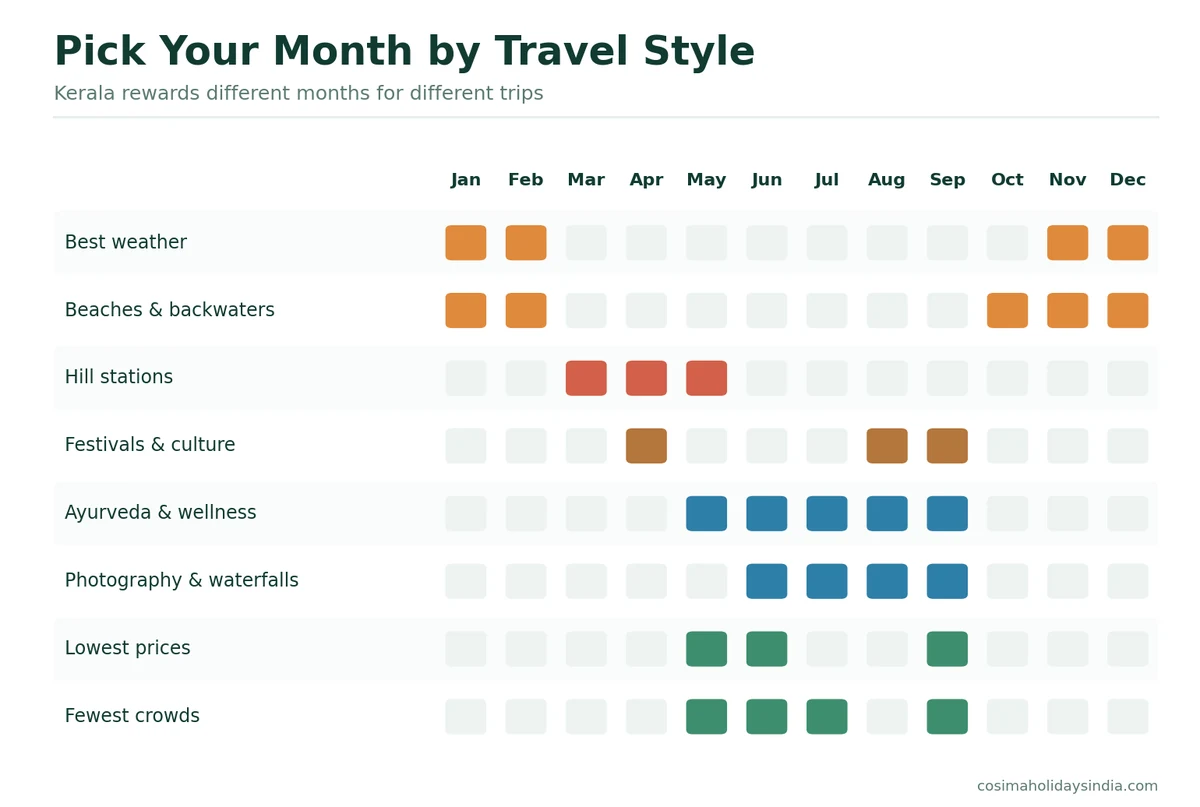
- For weather perfection: January, February, November or December
- For budget travel: May, June or September
- For cultural experiences: Onam (August–September) or Vishu (April)
- For Ayurveda: The monsoon months, June to September
- For avoiding crowds: May, June or September
Each season reveals different facets of Kerala’s personality. Winter showcases its beaches and backwaters. Monsoon unveils its wild, untamed beauty. Summer offers authentic local life without tourist filters.
Practical Weather Tips
- Clothing: Light cotton year-round, plus a light jacket for hill stations in winter.
- Monsoon kit: Waterproof bags and quick-dry clothing from June to September.
- Sunscreen: Essential even on cloudy days — Kerala sits close to the equator and UV stays strong.
- Mosquito repellent: Most needed during and just after the monsoon, when insect numbers peak.
- Road conditions: Check forecasts before treks or remote village visits in July, August and early September.
Frequently Asked Questions
Which month has the least rain in Kerala?
January, February and December are the driest months, with minimal rainfall and temperatures between 23°C and 32°C. These are also the busiest and most expensive months, so the trade-off is crowds rather than weather.
Is monsoon a bad time to visit Kerala?
Not necessarily. June to September brings heavy, consistent rain and some roads flood, so it is poor for beach holidays and long treks. But it is the cheapest, quietest time of year, the landscape is at its greenest, and it is the traditional season for Ayurvedic treatment.
What is the cheapest month to visit Kerala?
May, June and September offer the lowest rates. Tourist numbers drop, hotels discount heavily, and attractions are quiet. May is hot and humid; June is wet; September is wet but easing, with the landscape at its most photogenic.
What is the hottest month in Kerala?
March and April, both reaching 35°C. Coastal areas feel the heat far more than hill stations, so a Munnar, Wayanad or Thekkady itinerary stays comfortable when Kochi and the beaches do not.
When is Onam and should I plan my trip around it?
Onam usually falls in late August or early September. It is Kerala’s biggest festival, with pookalam flower carpets, snake boat races and the Onam sadya feast. Book well ahead — locals travel home for it, which fills accommodation and transport.
Which months should I avoid in Kerala?
There is no universally wrong month, only mismatches. Avoid June and July if you want beaches and dependable outdoor plans. Avoid April and May if you dislike heat and humidity. Avoid late December if crowds and premium pricing would spoil the trip.
Final Thoughts
Kerala’s weather creates distinct experiences throughout the year. There’s no universally “wrong” time to visit—just different versions of paradise. Winter brings comfort and convenience. Monsoon offers raw natural beauty and wellness opportunities. Summer provides authentic cultural immersion without tourist crowds.
Match the weather to your travel style, and Kerala will reward you with memories that last a lifetime.
Tell us your dates and we will tell you what to expect.
Cosima Holidays has planned Kerala trips from Kochi for 27 years. Send us the month you are considering and we will map an itinerary around that month’s weather — hills when it’s hot, backwaters when it’s clear, Ayurveda when it’s wet.
📞 WhatsApp: +91 98461 54195 or +91 95440 34945 | Browse Kerala tour packages | Enquire Now

